Low and Slow: What Really Makes Great Brisket

Brisket doesn't give a pitmaster much room for shortcuts.
It's a large, uneven cut made up of different muscles, with varying amounts of fat and a considerable amount of connective tissue. Yet after enough time in the smoker, those same characteristics help create the tenderness, richness, and flavor that make smoked brisket one of barbecue's signature meats.
Great brisket comes from balancing heat, smoke, and time so fat can render, connective tissue can soften, bark can develop, and the beef can become tender without losing its character. None of those things happens because of one secret rub or magic temperature. They're the result of what happens to the brisket throughout the entire cook.
At BBQ'd Productions, that process begins with dry-rubbed briskets going into the smoker "naked," or unwrapped, at the start of a 16-hour smoke.
So what is actually happening during all those hours, and what separates great smoked brisket from the rest?
Understanding Brisket Starts With the Cut
Brisket comes from the pectoral area of the cow, where the muscles do a considerable amount of work. Unlike naturally tender cuts of beef, brisket contains a high level of connective tissue, including collagen. That makes it tough if it isn't cooked in a way that gives that connective tissue enough time to break down.
A whole brisket also isn't one uniform piece of meat. It contains two primary sections commonly known as the flat and the point.
The flat is the leaner portion, while the point contains considerably more fat and marbling. Those differences in fat, shape, and muscle structure affect everything from how the brisket cooks to how it is sliced and ultimately served.
At BBQ'd, the point also serves another very important purpose: it's where our burnt ends begin. Its higher fat content and rich flavor make it particularly well suited for the additional cooking that transforms pieces of smoked brisket into those caramelized, smoky bites and helps explain why burnt ends are worth the hype.
Knowing what you're working with matters because everything that happens next has to account for the characteristics that make brisket such a distinctive cut in the first place.
Great Brisket Starts Before the Smoker
Long before smoke begins doing its work, decisions made during preparation affect the finished brisket.
Seasoning is one of the first. There are countless philosophies about brisket seasoning, from the traditional simplicity of salt and pepper to more complex blends of spices. Whatever the approach, the goal isn't to disguise the beef. It's to complement it.
At BBQ'd Productions, our briskets are seasoned with our proprietary dry rub. But once the brisket goes into the smoker, another ingredient enters the picture: smoke itself.
Smoke Should Be an Ingredient, Not the Main Event
More smoked doesn't automatically mean better barbecue.
Smoke works best when it contributes another layer of flavor without masking the beef underneath it. And because different woods produce different characteristics, choosing the wood matters.
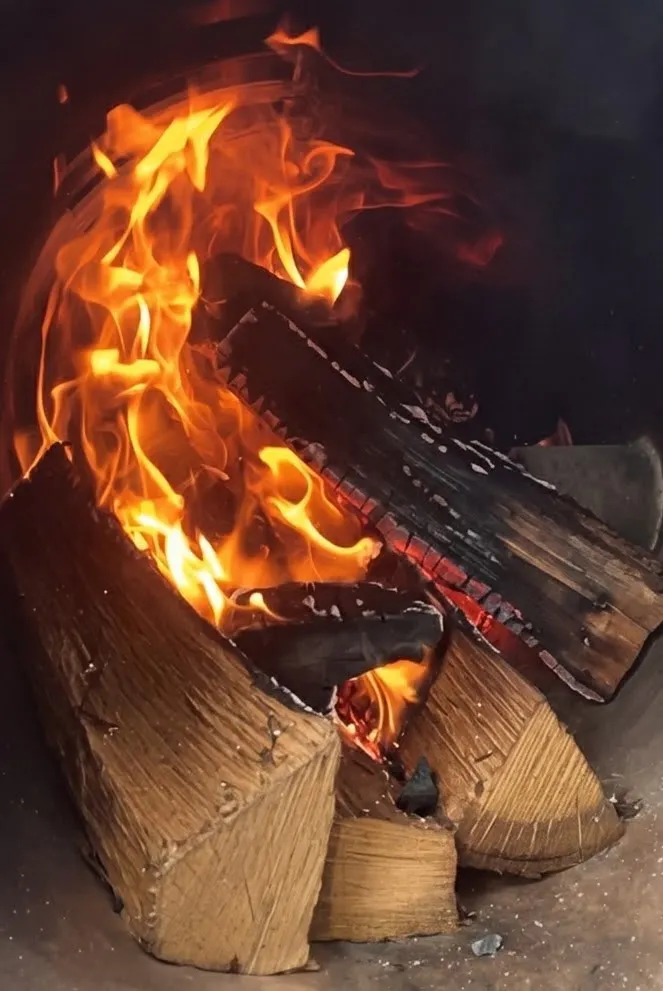
At BBQ'd, hickory and cherry wood help create that balance. Hickory brings a stronger, savory smoke profile, while cherry is milder and adds another layer without overwhelming the meat. Together, they allow the smoke to add depth while still leaving room for the natural flavor of the brisket and its seasoning.
That combination also connects to the Kansas City-style barbecue tradition behind our approach. Kansas City barbecue is known for using versatile hardwoods such as hickory along with fruitwoods like cherry, which work across the wide variety of meats associated with the style.
And while a beautiful pink smoke ring underneath the bark certainly looks impressive, it isn't a report card for the brisket. A smoke ring is the result of a chemical reaction between compounds produced by combustion and myoglobin in the meat. It may tell you something about what happened during the cook, but it can't tell you whether the brisket is tender, juicy, or flavorful.
The smoke ring isn't the only change happening at the surface of the brisket, though. As the cook continues, the exterior develops something that has a much more noticeable effect on both flavor and texture: bark.
Great Bark Isn't Burnt
One of the most recognizable features of smoked brisket is its dark exterior, known as the bark.
To someone unfamiliar with barbecue, good bark can almost look burnt. It isn't.
As the brisket spends hours in the smoker, its surface changes. Moisture evaporates, the dry rub interacts with the meat, smoke settles on the exterior, and browning reactions help create a dark, concentrated crust.
The result is more than appearance. Bark provides a contrast in both flavor and texture between the outside of the brisket and the tender meat underneath it.
Developing that exterior takes time. So does what's happening underneath it.
What Happens During 16 Hours in the Smoker?
"Low and slow" gets used so often in barbecue that it's easy to forget there is real science behind it.
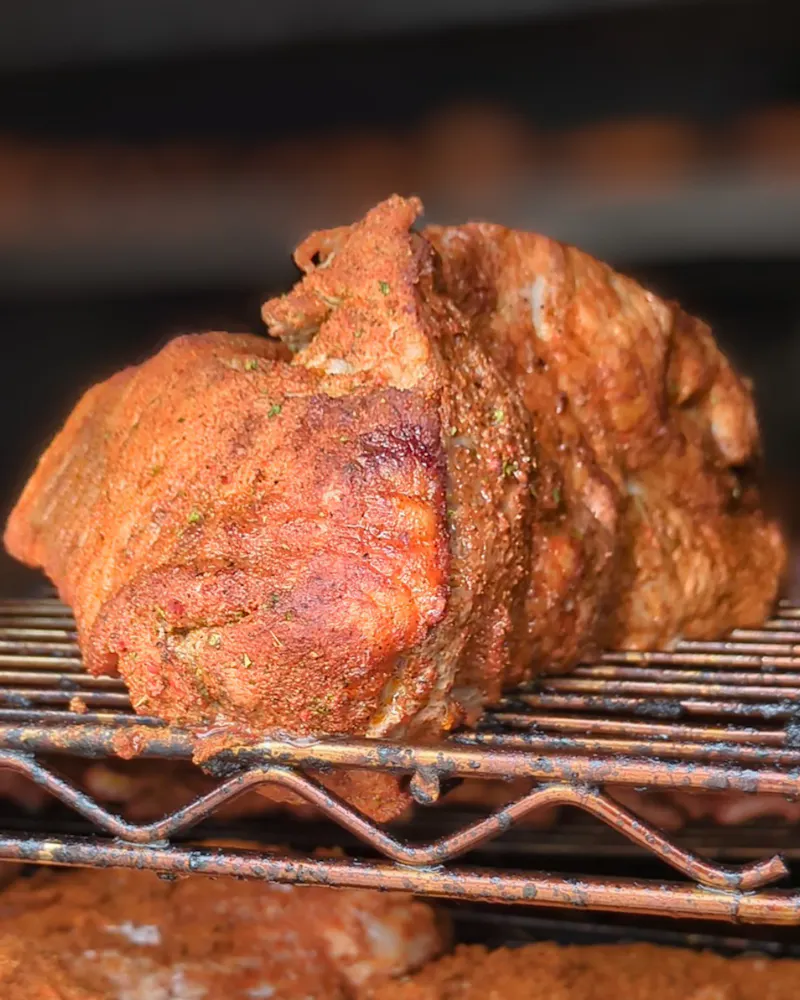
As we mentioned earlier, brisket contains a significant amount of collagen in its connective tissue. As the meat cooks, that collagen gradually converts to gelatin while fat renders and the muscle itself changes under heat. Those changes are an important part of turning a naturally tough cut into tender barbecue.
They also can't simply be rushed by turning up the heat. Time and temperature work together, allowing those changes to happen gradually while the brisket continues to develop.
At BBQ'd Productions, that means a 16-hour smoke. And even over that much time, a brisket doesn't always progress at a steady pace.
When Brisket Seems to Stop Cooking
Anyone who has spent enough time around a smoker eventually encounters one of brisket's most interesting quirks: the stall.
As a brisket's internal temperature climbs, there comes a point when that progress can slow dramatically or seem to stop altogether. At BBQ'd Productions, we typically see that happen around 165–167°F. Once our briskets reach that stage, we're constantly monitoring their progress, temping the meat about every 15 minutes.
Encountering a stall doesn't mean anything has necessarily gone wrong. As moisture reaches the surface of the brisket and evaporates, it cools the meat at the same time heat from the smoker is trying to warm it. For a period of time, those opposing forces can essentially balance each other out. That plateau is what pitmasters call the stall.
How long it lasts is another matter. Every brisket can behave a little differently. A stall might last only about 30 minutes or continue for several hours. With the briskets we smoke at BBQ'd, we generally don't see the stall extend beyond about two hours.
Once the temperature begins climbing again, we're working toward another number: 179–181°F, the range we target for our finished brisket.
But even having a target temperature doesn't mean brisket can be reduced to a number on a thermometer.
A Thermometer Doesn't Tell the Whole Story
There's an important difference between a piece of beef reaching a safe internal temperature and a brisket reaching the tenderness expected from great barbecue.
For whole cuts of beef, USDA food-safety guidance establishes 145°F followed by at least a three-minute rest as the minimum safe internal temperature. Brisket destined for barbecue is cooked well beyond the minimum required for safety because tenderness is a completely different objective. The connective tissue needs additional time and heat to soften.
Briskets vary in size, shape, thickness, fat, and composition. Even conditions inside and outside the smoker can affect the cooking process. Two briskets that went into a smoker together don't necessarily behave identically. That's why we're monitoring them so closely as they move through the stall and toward their finished temperature.
A thermometer gives a pitmaster critical information about what's happening inside the meat, but the number makes sense only in the context of the entire cook. Ultimately, each brisket progresses on its own timeline, regardless of when you planned to serve it.
Brisket, in other words, doesn't care what time dinner starts.
The Smoker Isn't Necessarily the Finish Line
After spending hours concentrating on the cook, slicing immediately can be tempting. But what happens after a brisket leaves the smoker matters, too.
A large cut of meat remains extremely hot after it comes off the smoker, and cutting into it immediately isn't the goal. Giving brisket time to rest allows its temperature to begin coming down and gives the meat time to settle before it's sliced. Resting isn't simply waiting for the brisket to be served. It's another part of the process.
For a barbecue restaurant, that entire timeline has to be planned long before the first guest places an order. When a brisket requires 16 hours in the smoker, tomorrow's service begins today.
That's also why the smokers at BBQ'd don't necessarily get holidays. Our smokers run on Thanksgiving and Christmas Day because the barbecue for the next day's service is already in motion. Low and slow doesn't adjust itself around the calendar.
Even the Way Brisket Is Sliced Matters
After all those hours of preparation and smoking, there is still one more opportunity to affect the final bite.
Brisket needs to be sliced with its grain in mind. Muscle fibers run in a particular direction, and slicing across those fibers shortens them, making the meat easier to chew. The challenge with brisket is that the point and flat don't share exactly the same grain direction.
Slicing against the grain helps the tenderness developed during the cook carry through to the final bite. Even well-smoked brisket can seem tougher than it really is if it's sliced incorrectly.
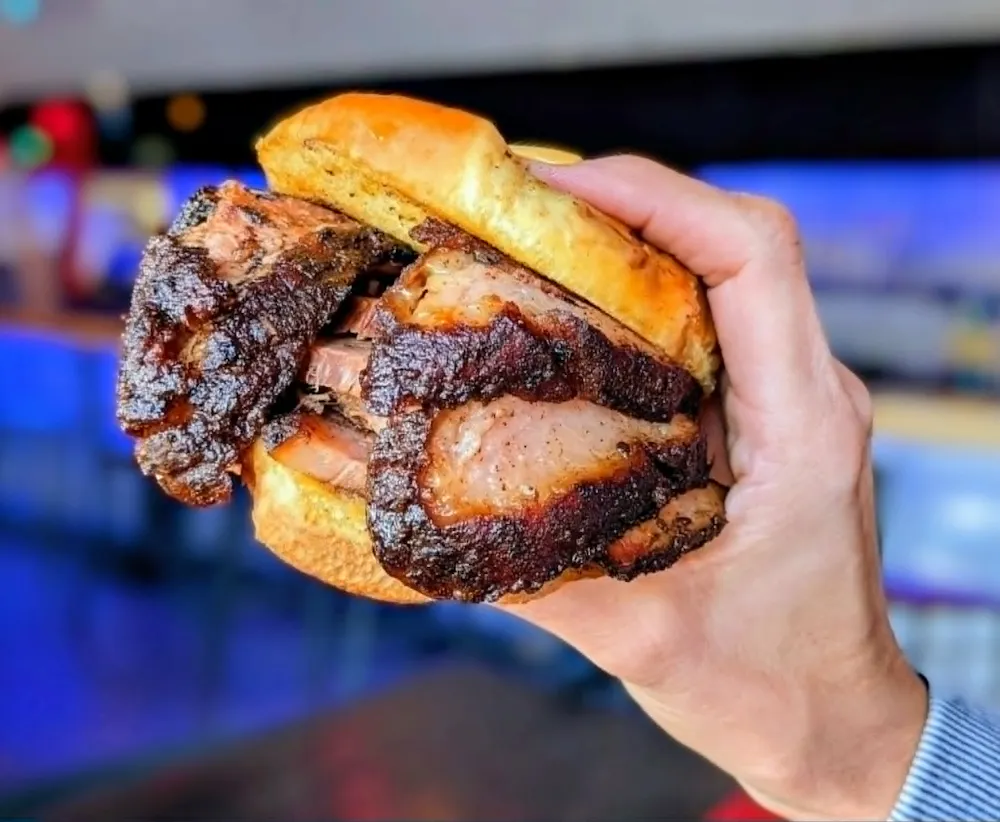
Thickness matters, too. At BBQ'd, we slice our brisket thin, consistent with the way we serve Kansas City-style barbecue. It gives us a versatile slice that works whether the brisket is served on a platter, piled onto a sandwich, or used in another dish.
The knife may come at the end of the process, but it still matters.
So What Actually Makes Great Smoked Brisket?
There isn't just one answer.
It isn't the darkest bark, the biggest smoke ring, the strongest smoke flavor, or a secret finishing temperature. Great brisket is the result of everything that happens along the way: the cut itself, preparation, seasoning, wood, smoke, heat, time, bark development, tenderness, resting, and finally slicing.
Each step affects the next. A tough, hardworking cut of beef becomes something entirely different through smoke, heat, time, and knowing what to watch for along the way.
That's what those 16 hours represent at BBQ'd Productions. Not simply time in a smoker, but a process that starts long before brisket is sliced and served at our tables in Third Lake, Lake Zurich, and Kenosha.
Great brisket takes time, attention, and patience, with no room for shortcuts.